- Services
- Company
- Industries
- Partner
- Resources
- Contact Us
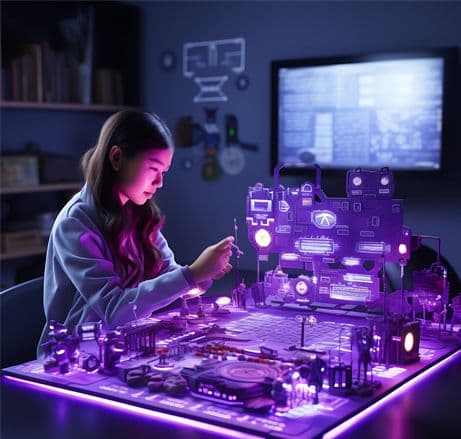
The manufacturing industry is undergoing its most significant evolution since the industrial revolution, driven by Industry 4.0 technologies that are reshaping production environments. Smart automation, IoT-enabled monitoring, predictive maintenance, robotics, and real-time analytics are now central to optimising performance and reducing downtime. With global competition intensifying and customer expectations rising, factories are under pressure to deliver faster, customise more, minimise wastage, and maintain consistently high quality. Digitisation is no longer optional. Manufacturers need unified systems that connect machines, people, and processes across procurement, production, inventory, and distribution.

Modern ERP platforms, intelligent planning tools, cloud-native infrastructure, and AI-enhanced quality workflows are becoming essential pillars of operational excellence. At the same time, sustainability, energy efficiency, workforce productivity, and compliance requirements are shaping strategic decisions more aggressively than ever before. As OEMs, suppliers, and factories navigate increasingly complex supply chains, the need for agile systems, accurate data, integrated applications, and strong governance continues to grow. Manufacturers that embrace smart, scalable, and analytics-driven digital ecosystems are the ones advancing toward the next wave of global industrial transformation.

Disconnected systems limit real-time tracking, planning accuracy, and operational predictability.

Older ERPs and non-automated processes obstruct agility, integration, and modernisation efforts.

Lack of diagnostics and predictive insights increases machine failures and disrupts output.

Manual inspections and inconsistent tracking lead to defects, rework, and increased production costs.
Growing data volumes and multi-unit production require resilient infrastructure and scalable applications.
Handling industrial data demands strong cybersecurity, monitoring, and adherence to global standards.
Disconnected systems limit real-time tracking, planning accuracy, and operational predictability.
Older ERPs and non-automated processes obstruct agility, integration, and modernisation efforts.
Lack of diagnostics and predictive insights increases machine failures and disrupts output.
Manual inspections and inconsistent tracking lead to defects, rework, and increased production costs.
Growing data volumes and multi-unit production require resilient infrastructure and scalable applications.
Handling industrial data demands strong cybersecurity, monitoring, and adherence to global standards.

We unify disconnected systems and implement dashboards, IoT integrations, and data pipelines that provide accurate, real-time insights across procurement, production, inventory, and dispatch.
We rebuild outdated ERPs and legacy workflows into modular, connected applications that streamline operations, support automation, and strengthen end-to-end process efficiency.
Through telemetry data, analytics layers, and diagnostic engines, we help teams anticipate failures, improve utilisation, and minimise costly unplanned downtime.
We introduce structured data flows, digital inspection tools, and AI-based defect detection to enhance consistency, reduce rework, and elevate overall product quality.
Our cloud-native architectures support high data volumes, automation workflows, and multi-unit expansion, ensuring stable performance across diverse manufacturing environments.
We strengthen manufacturing systems with governance-led security controls, proactive monitoring, and robust frameworks aligned to global standards for industrial data protection.
Beyond solving these core challenges, we help organisations elevate every layer of their digital ecosystem.
"Leapcodes helped us digitize our manufacturing operations with a clear, results-driven approach. From building a robust digital platform to improving visibility across our processes, their team understood our operational challenges and delivered solutions that support efficiency and scale. Their professionalism and technical depth made the collaboration seamless."